Upholstery cleaning preserves appearance and extends furniture service life. Different cleaning methods vary in effectiveness and in their impact on indoor health. This article compares steam cleaning with traditional techniques, summarising performance, benefits, and cost considerations. The analysis explains how steam cleaning cleans fabrics, supports fabric care, and can reduce environmental impact. Practical guidance addresses allergen control and stain management to help readers select the most appropriate method.
Effectiveness:
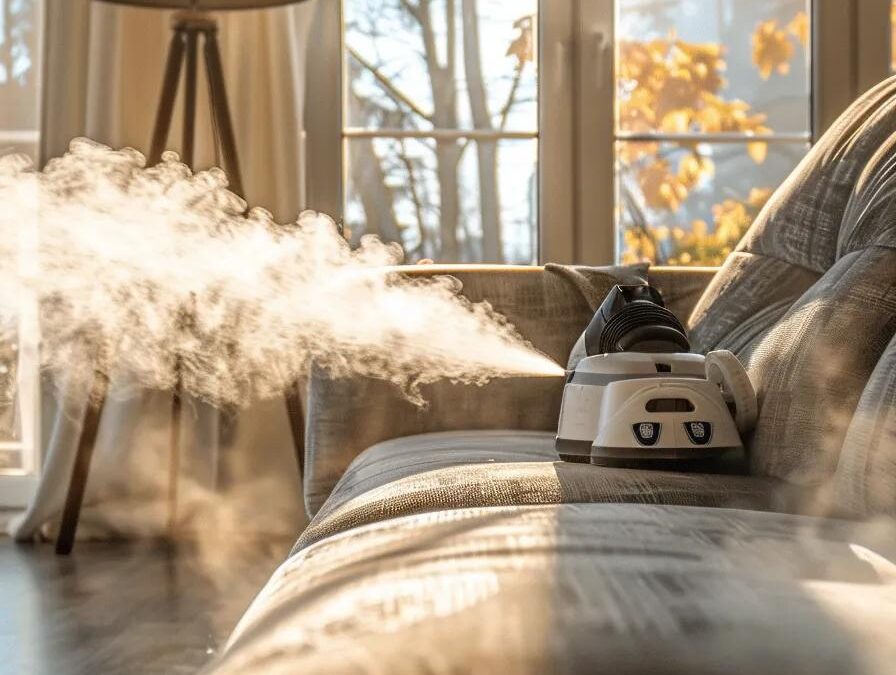
Upholstery steam cleaning is widely regarded as more effective than many traditional approaches. The process uses high-temperature steam to penetrate fibers and dislodge dirt, allergens, and stains. Unlike some traditional methods that can leave chemical residues, steam cleaning delivers a deeper clean and contributes to improved indoor air quality by reducing allergens and bacteria. The effectiveness of “Chem-Dry’s cleaning method” is cited to remove up to 89% of allergens from carpets and upholstery, making it a suitable option for households with allergy sufferers.
Additional studies corroborate steam cleaning’s capacity to reduce common household allergens.
Upholstery Steam Cleaning for Mite Allergen Reduction
Homes with high levels of house dust mite allergen (Der f 1 + Der p 1 > or = 10 microg/g dust by enzyme-linked immunosorbent assay) in the bed, bedroom carpet, and/or upholstered furniture were enrolled in the study. Carpets and upholstered furniture were subjected to a single treatment of either dry steam cleaning plus vacuuming (carpet only) or intensive vacuuming alone.
Effects of physical interventions on house dust mite allergen levels in carpet, bed, and upholstery dust in low-income, urban homes, 2001
Benefits:
Upholstery steam cleaning provides measurable advantages beyond visual improvement. Key benefits include faster drying, reduced chemical exposure, and prolonged fabric life.
- Faster Drying Times : Steam cleaning uses less water than traditional methods, resulting in quicker drying times, often within 1-2 hours.
- Healthier Cleaning Solutions : Chem-Dry employs eco-friendly cleaning solutions that are safe for children and pets, reducing exposure to harmful chemicals.
- Longer Lasting Clean : The deep cleaning action of steam helps to prolong the life of upholstery by preventing the buildup of dirt and grime.
Chem-Dry of The Kawarthas specialises in upholstery steam cleaning and applies standardised procedures to ensure thorough, safe results.
Cost-Effective Solutions:
Cost-effectiveness is central to specifying an upholstery cleaning regimen. Regular steam cleaning can extend furniture life and reduce replacement costs. Chem-Dry’s tailored service packages address varied client needs and aim to deliver measured value. Improved indoor air quality from steam cleaning can also reduce long-term health-related expenditures.
| Service | Benefit | Cost |
|---|---|---|
| Upholstery Steam Cleaning | Deep clean, allergen removal | Competitive pricing |
| Traditional Cleaning | Surface clean, potential residues | Often lower initial cost |
| Chem-Dry Packages | Comprehensive care, eco-friendly | Value for long-term maintenance |
The table compares benefits and costs for each service type and highlights the long-term savings associated with steam cleaning.
What Are the Key Benefits of Upholstery Steam Cleaning?
Several specific benefits position steam cleaning as a preferred maintenance method for furniture.
- Effectiveness in Allergen Removal : Steam cleaning effectively eliminates allergens, providing a healthier living environment.
- Health Advantages of Non-Toxic Solutions : The use of eco-friendly cleaning solutions ensures safety for all household members.
- Cost Savings from Reduced Water Usage : Steam cleaning uses significantly less water than traditional methods, leading to lower utility bills.
How Does Steam Cleaning Enhance Fabric Care and Stain Removal?
Steam cleaning employs elevated temperatures to break down soil and stains while preserving fiber integrity. The carbonation process used in “Chem-Dry’s method” enables deeper soil extraction and stain lifting. Faster drying also reduces the likelihood of mold and mildew that can result from excess moisture.
What Health and Environmental Advantages Does Steam Cleaning Offer?
Steam cleaning delivers documented health and environmental advantages as part of a comprehensive cleaning protocol.
- Allergen Removal Statistics : Studies show that steam cleaning can remove up to 89% of common allergens from upholstery.
- Water Conservation Benefits : This method uses significantly less water than traditional cleaning, promoting sustainability.
- Eco-Friendly Cleaning Solutions : Chem-Dry’s commitment to using non-toxic products ensures a safe environment for families and pets.
Evidence indicates that dry steam cleaning addresses allergens and other harmful contaminants.
Dry Steam Cleaning Efficacy: Reducing Allergens & PAHs
Dry steam cleaning, which has gained recent attention as an effective method to reduce house dust mite (HDM) allergen concentration and loading in carpets, was evaluated in this study for its efficacy in lowering levels of polycyclic aromatichydrocarbons(PAHs) as well as HDM allergens.
Evaluation of HEPA vacuum cleaning and dry steam cleaning in reducing levels of polycyclic aromatic hydrocarbons and house dust mite allergens in carpets, CH Yu, 2009
How Do Traditional Upholstery Cleaning Methods Compare?
Traditional methods such as dry cleaning and shampooing frequently provide only surface cleaning. They may leave residues that attract soil and allergens and typically require longer drying times, which increases the risk of mold development.
What Are Common Traditional Techniques and Their Limitations?
Common traditional cleaning techniques include:
- Dry Cleaning : Uses chemical solvents that may leave residues and can be harmful to health.
- Shampooing : Involves applying a foam that can saturate fabrics, leading to longer drying times and potential mold issues.
- Vacuuming : While essential for maintenance, it only removes surface dirt and does not provide a deep clean.
These traditional approaches often lack the depth of cleaning and health benefits associated with steam-based methods.
How Do Dry Cleaning and Shampooing Affect Upholstery Fabrics?
Dry cleaning and shampooing can introduce harsh chemicals or excess moisture that accelerate fabric wear. Over time, these effects may shorten furniture lifespan. In contrast, steam cleaning provides deep cleaning while being gentle on upholstery materials.
What Is the Cost Comparison Between Steam and Traditional Upholstery Cleaning?
Steam cleaning can involve higher initial expense but typically delivers long-term savings through extended fabric life and reduced health-related costs. Traditional methods may appear less expensive upfront but can require more frequent maintenance and earlier replacement.
How Do Pricing Structures Differ for Professional Cleaning Services?
Professional cleaning providers commonly use several pricing models, including:
- Flat Rate : A set price for specific services, providing clarity on costs.
- Hourly Rate : Charges based on the time taken, which can vary depending on the job complexity.
- Service Packages : Bundled services that offer discounts for multiple cleanings or additional services.
Awareness of these pricing structures enables clients to select the option that best aligns with budget and service requirements.
What Is the Return on Investment for Choosing Eco-Friendly Steam Cleaning?
Investing in eco-friendly steam cleaning can produce measurable returns through reduced water use, faster turnaround, and prolonged fabric condition.
- Water Savings Statistics : Steam cleaning uses up to 80% less water than traditional methods.
- Faster Drying Times Benefits : Reduced drying times minimize the risk of mold and mildew, leading to fewer health issues.
- Longer-Lasting Cleanliness : The deep cleaning action of steam helps maintain upholstery for longer periods, reducing the need for frequent replacements.
Is Steam Cleaning Suitable for All Upholstery Fabric Types?
Steam cleaning is appropriate for many upholstery materials, but fabric composition must guide selection. Natural fibers such as cotton and wool generally tolerate steam cleaning well. More delicate textiles may require alternative approaches. Consultation with a professional will identify the correct method for specific fabrics.
Which Fabrics Benefit Most from Steam Cleaning Technology?
- Synthetic Fibers : Such as polyester and nylon, which are durable and resistant to moisture.
- Cotton : A natural fiber that can withstand high temperatures and benefits from deep cleaning.
- Microfiber : Known for its stain resistance, it responds well to steam cleaning techniques.
These materials typically achieve improved cleanliness and extended service life when maintained with steam cleaning.
Are There Any Fabric Types That Require Alternative Cleaning Methods?
- Silk : A delicate fabric that can be harmed by high temperatures and moisture.
- Leather : Requires specialized cleaning products to maintain its integrity and appearance.
- Velvet : Can be sensitive to water and may need dry cleaning to preserve its texture.
Professional assessment is recommended to determine suitable cleaning techniques for these materials.
How Can Customers Book Professional Upholstery Steam Cleaning with Chem-Dry of The Kawarthas?
Customers may book upholstery steam cleaning with Chem-Dry of The Kawarthas via the company website or by direct contact. The booking workflow allows selection of required services and scheduling at a convenient time.
What Is the Local Service Area and Booking Process?
Chem-Dry of The Kawarthas provides services across the Kawarthas region. Clients may inquire by telephone or online about availability and arrange appointments. The process is designed to be clear and efficient.
What Customer Support and Satisfaction Guarantees Are Provided?
Chem-Dry of The Kawarthas emphasises customer satisfaction through dedicated support and satisfaction guarantees. Clients can expect timely communication and a commitment to resolve any service-related concerns. This service focus distinguishes Chem-Dry within the upholstery cleaning sector.
Frequently Asked Questions
What types of upholstery are not suitable for steam cleaning?
Certain materials require alternative cleaning methods. Silk may be damaged by high temperatures and moisture. Leather needs specialised products to preserve finish and structure. Velvet can be sensitive to water and may require dry cleaning to maintain texture. Seek professional guidance to avoid damaging sensitive upholstery.
How often should upholstery be steam cleaned?
Recommended frequency depends on usage, household conditions, and allergen presence. A general guideline is every 6 to 12 months to maintain appearance and extend fabric life. Residences with pets or allergy sufferers may require more frequent cleaning to control allergens.
Can steam cleaning remove tough stains from upholstery?
Steam cleaning is effective at removing many stubborn stains. High-temperature steam penetrates fibers to loosen soil without harming fabric when applied correctly. Some stains may need pre-treatment or specialised solutions; professional assessment improves the likelihood of complete removal.
What should I do to prepare my upholstery for steam cleaning?
Prepare upholstery by removing loose items such as cushions and decorative pillows. Vacuum surfaces to eliminate debris. Pre-treat visible stains following the cleaner’s guidance. Clear surrounding areas to provide unobstructed access for technicians. These steps support optimal cleaning outcomes.
Are there any health risks associated with traditional upholstery cleaning methods?
Traditional methods can present health risks due to harsh chemicals and solvent residues. These substances may cause irritation of the skin, eyes, or respiratory system. Shampooing can introduce excess moisture and elevate mold risk. Steam cleaning with eco-friendly solutions reduces chemical exposure and can be a safer option for households with children and pets.
What is the drying time for upholstery after steam cleaning?
A principal advantage of steam cleaning is the relatively rapid drying time. Upholstery typically dries within 1 to 2 hours, depending on fabric and ambient conditions. This is substantially faster than many conventional methods, which may require several hours or days, and helps minimise mold and mildew risk.
How can I maintain my upholstery after steam cleaning?
Maintain upholstery with regular care. Vacuum weekly to reduce surface soil. Apply fabric protectors as appropriate to guard against stains. Address spills promptly by blotting with a clean cloth rather than rubbing. Schedule professional steam cleaning every 6 to 12 months to preserve appearance and prolong service life.
Conclusion
Upholstery steam cleaning offers a robust solution for preserving furniture condition and improving indoor health. Benefits include effective allergen reduction and reduced drying times. Selecting steam cleaning represents an investment in fabric durability and occupant wellbeing. For professional, eco-conscious service, consider scheduling an appointment with Chem-Dry of The Kawarthas to experience the documented advantages of steam-based cleaning.